Facelift in Thailand - Rejuvenate Your Appearance With Expert Surgeons
The gold standard for reversing visible facial ageing. Board-certified surgeons, JCI-accredited hospitals, and 50-70% savings vs Western countries.
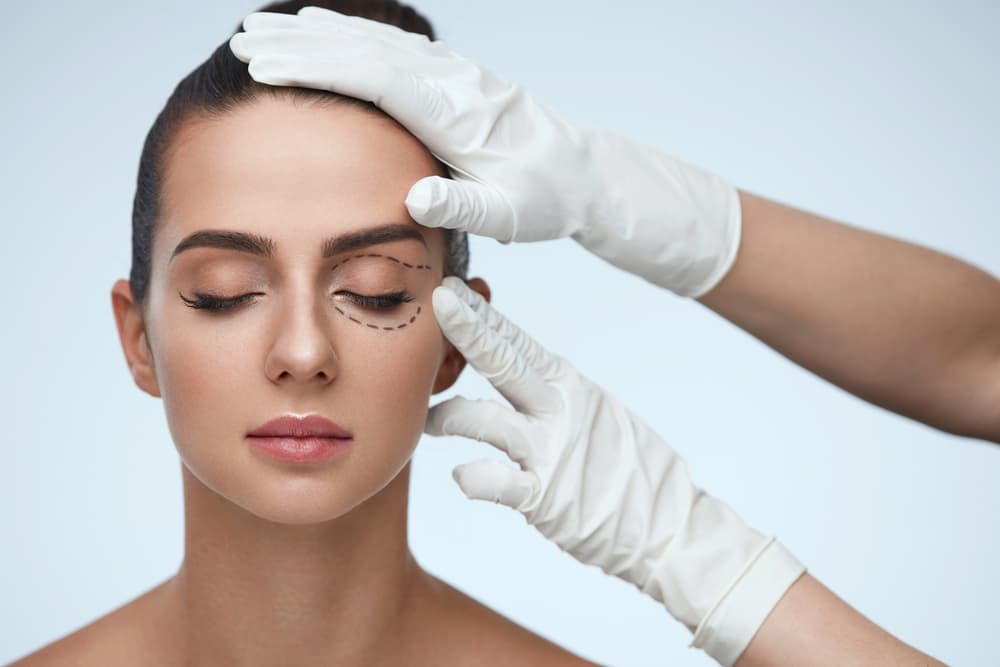
From $5,000
All-inclusive pricing
3-4 Hours
Procedure time
1-4 nights
Hospital stay
10-14 Days
Stay in Thailand
What Is a Facelift?
A facelift, or rhytidectomy, is a surgical procedure designed to reduce the visible signs of ageing across the mid-face, lower face, and neck. During the operation, a surgeon tightens the underlying musculoaponeurotic tissues (SMAS), repositions displaced fat pads, removes excess skin, and redrapes the remaining skin for a smoother, more youthful contour.
The procedure addresses concerns that non-surgical treatments cannot fully correct, including deep nasolabial folds, jowls and sagging along the jawline, loss of definition in the neck and chin area, and loose, redundant facial skin.
A facelift does not stop the ageing process, but it can turn the clock back by approximately 7 to 10 years - and the results are long-lasting when combined with a healthy lifestyle and sun protection. It is often combined with a neck lift for comprehensive rejuvenation.
Types of Facelift
Traditional (Full) Facelift
The most comprehensive option. Incisions begin above the hairline at the temples, continue around the ear, and extend into the lower scalp. Delivers the most significant results.
SMAS Facelift
Focuses specifically on the Superficial Musculoaponeurotic System. By tightening this layer separately from the skin, the result appears more natural and avoids a "pulled" look.
Deep-Plane Facelift
Releases and repositions the deeper tissue layers as a single unit, producing natural-looking volume restoration in the mid-face.
Mini Facelift
A less invasive option using shorter incisions, ideal for patients with mild to moderate sagging. Recovery time is shorter.
Endoscopic Facelift
Uses small incisions and a tiny camera (endoscope) to lift tissues with minimal scarring. Best suited for patients who need moderate lifting without significant skin removal.
Who Is a Good Candidate?
You may be a good candidate if you:
- Are between 40 and 70 years old (though suitability depends on skin quality)
- Have moderate to significant sagging of the mid-face, jowls, or neck
- Are in good general health with no uncontrolled medical conditions
- Are a non-smoker or willing to stop smoking at least four weeks before and after surgery
- Have realistic expectations about achievable outcomes
A full facelift may not be appropriate if you:
- Have only early or mild signs of ageing (a mini facelift or thread lift may be more suitable)
- Have uncontrolled diabetes or hypertension that could impair healing
- Are a heavy smoker unwilling to quit for the required period
How a Facelift Is Performed
The operation typically takes 3 to 4 hours. Patients spend 1 to 4 nights in the hospital for monitoring.
Anaesthesia
General anaesthesia is administered. In some cases, local anaesthesia with sedation may be used for less extensive procedures.
Incisions
The surgeon makes an incision that begins above the hairline at the temple, continues in front of and around the ear, and ends in the lower scalp behind the ear.
Tissue Repositioning
The surgeon lifts the skin flap to access the underlying SMAS layer. Tissues are tightened, fat pads are repositioned to restore youthful volume, and deeper structures are secured.
Skin Redraping
Excess skin is trimmed and the remaining skin is gently redraped over the newly tightened framework.
Closure
Dissolvable sutures are used to close the incisions, minimising the need for suture removal.
Drains and Dressings
A small drain may be placed behind the ear to prevent fluid accumulation. Bandages are applied to protect the surgical site.
Preparing for Your Facelift
Medical Evaluation
- • Your surgeon will review your medical history, current medications, and allergies.
- • Blood tests and possibly an ECG will be ordered prior to surgery.
Medications to Avoid
- • Stop taking aspirin, ibuprofen, vitamin E, and fish oil at least two weeks before surgery to reduce bleeding risks.
Smoking Cessation
- • Cease all tobacco and nicotine products a minimum of four weeks before and after surgery. Nicotine dramatically increases the risk of tissue death and poor scarring.
Practical Arrangements
- • Arrange accommodation for the full recovery stay of 10-14 days.
- • Have loose, button-front shirts available.
- • Stock up on soft foods.
Recovery and Aftercare
Immediate Care
Early Healing
Progressive Recovery
Final Results
Risks and Complications
Common Risks
- • Haematoma - a collection of blood under the skin, the most common complication which may require drainage
- • Nerve injury - temporary numbness or weakness is common and usually resolves within weeks to months
- • Scarring - incisions are placed to minimise visible scarring, but individual healing varies
Less Common Complications
- • Infection - rare in hospital settings but treated promptly with antibiotics if it occurs
- • Skin flap necrosis - extremely rare, primarily associated with smoking
- • Asymmetry - minor differences between sides may occur
- • Anaesthesia risks - discussed in detail during consultation
Thailand's JCI-accredited hospitals maintain international safety standards, and all surgeons performing facelifts through our service are board-certified with extensive experience in facial rejuvenation.
Facelift Cost in Thailand
Prices below are starting rates in USD and include hospital fees, surgeon fees, anaesthesia, and post-operative care.
| Hospital / Clinic | Starting Price (USD) | Hospital Stay |
|---|---|---|
| Bangkok Hospital Pattaya | $2,100 - $4,200 | 1-4 nights |
| Yanhee International Hospital | From $4,230 | 1-4 nights |
| Phuket International Hospital | $4,016 - $7,458 | 1-4 nights |
| Kamol Cosmetic Hospital | $5,960 | 1-4 nights |
| Bangpakok 9 International Hospital | $7,400 | 1-4 nights |
| Apex Medical Center | $11,342 - $13,977 | 1-4 nights |
Patients typically save 50-70% compared to equivalent procedures in the US, UK, or Australia.
Why Choose Thailand
World-Class Infrastructure
JCI-accredited hospitals matching top US and European standards.
Experienced Surgeons
Board-certified specialists with unmatched high-volume experience.
Significant Savings
Save 50-70% without compromising on quality or safety.
Recovery Environment
Recuperate in a comfortable, tropical setting with luxury hospitality.
Comprehensive Support
End-to-end assistance for over 26,000 international patients.
Frequently Asked Questions
Book Your Free Consultation
Taking the first step towards a facelift in Thailand is simple. Our experienced patient coordinators guide you through every stage - from initial enquiry to post-operative follow-up - at absolutely no cost to you.
- Free, no-obligation consultation
- Personalised hospital recommendations
- Complete trip coordination
- 26,000+ happy patients