Breast Augmentation Thailand 2026 | Complete Guide

Breast augmentation remains one of the most popular cosmetic procedures for women visiting Thailand, with over 15,000 breast augmentation surgeries performed annually on international patients. Whether you are looking to enhance volume, restore shape after pregnancy, or achieve better symmetry, Thailand offers world-class surgical expertise at a fraction of Western costs. This guide covers everything you need to know about breast augmentation in Thailand in 2026—from implant selection to recovery timelines and cost breakdowns.
Why Thailand for Breast Augmentation?
Thailand has established itself as a premier destination for breast augmentation surgery through a combination of factors that are difficult to replicate elsewhere. Thai surgeons perform exceptionally high volumes of breast procedures, developing expertise that comes from repetition and specialization. Many Thai plastic surgeons train internationally—completing fellowships in the United States, South Korea, or Europe—before returning to practice in Thailand's modern, JCI-accredited hospitals.
Key advantages of choosing Thailand:
- Cost savings of 60-70% compared to US, UK, or Australian prices without compromising quality
- Board-certified surgeons with international training and 10-20+ years of specialized experience
- Latest implant technology including Motiva, Mentor, and Polytech devices with full warranties
- Comprehensive packages including surgery, hospital stay, medications, and follow-up care
- Luxury recovery environment with resort-style accommodations and 24/7 nursing support
- English-speaking coordinators who manage every aspect of your medical journey
Learn more about the procedure itself, including surgical techniques, implant options, and candidacy requirements on our dedicated breast augmentation procedure page.
Breast Augmentation Costs in Thailand (2026)
Understanding the full cost breakdown helps you budget appropriately and avoid unexpected expenses. Prices vary based on implant type, surgeon experience, and hospital tier. The following ranges represent typical costs at JCI-accredited hospitals in Bangkok and Pattaya.
Standard Silicone Implants (Round)
Round silicone gel implants remain the most popular choice for breast augmentation. These cohesive gel devices provide natural feel and movement while maintaining shape. Standard round implants are suitable for most patients seeking general volume enhancement.
Round silicone implant costs (2026):
- Implant cost: THB 60,000-90,000 ($1,700-2,600 USD) per pair
- Surgical fee: THB 80,000-120,000 ($2,300-3,400 USD)
- Hospital facility fee: THB 30,000-50,000 ($850-1,400 USD) for 1-2 night stay
- Anesthesia: THB 15,000-25,000 ($425-700 USD)
- Total estimated cost: THB 185,000-285,000 ($5,275-8,100 USD)
Anatomical (Teardrop) Implants
Anatomical or teardrop-shaped implants provide a more natural slope and are ideal for patients with minimal existing breast tissue or those seeking subtle, natural-looking enhancement. These textured implants require precise surgical placement.
Anatomical implant costs (2026):
- Implant cost: THB 90,000-130,000 ($2,600-3,700 USD) per pair
- Surgical fee: THB 100,000-150,000 ($2,850-4,300 USD)
- Hospital facility fee: THB 30,000-50,000 ($850-1,400 USD)
- Anesthesia: THB 15,000-25,000 ($425-700 USD)
- Total estimated cost: THB 235,000-355,000 ($6,700-10,100 USD)
Premium Implant Options
Premium implant brands like Motiva Ergonomix offer advanced features including progressive gel cohesivity, blue seal technology for rupture detection, and extended warranties. These devices command higher prices but provide additional safety features and natural movement.
Premium implant costs (2026):
- Motiva Ergonomix: THB 150,000-200,000 ($4,300-5,700 USD) per pair
- Mentor MemoryGel Xtra: THB 130,000-170,000 ($3,700-4,850 USD) per pair
- Polytech Microthane: THB 120,000-160,000 ($3,400-4,550 USD) per pair
- Total with premium implants: THB 300,000-450,000 ($8,550-12,850 USD)
Price Transparency Tip: Reputable Thai hospitals provide itemized quotes upfront. Be wary of prices significantly below these ranges—quality implants alone cost THB 50,000+ wholesale. Extremely low quotes may indicate non-medical-grade implants or inexperienced surgeons.
Choosing Your Implants: Size, Shape, and Placement
Your implant selection determines both your aesthetic outcome and long-term satisfaction. During your consultation, your surgeon will recommend options based on your chest anatomy, tissue quality, and desired outcome.
Implant Size: CCs and Cup Changes
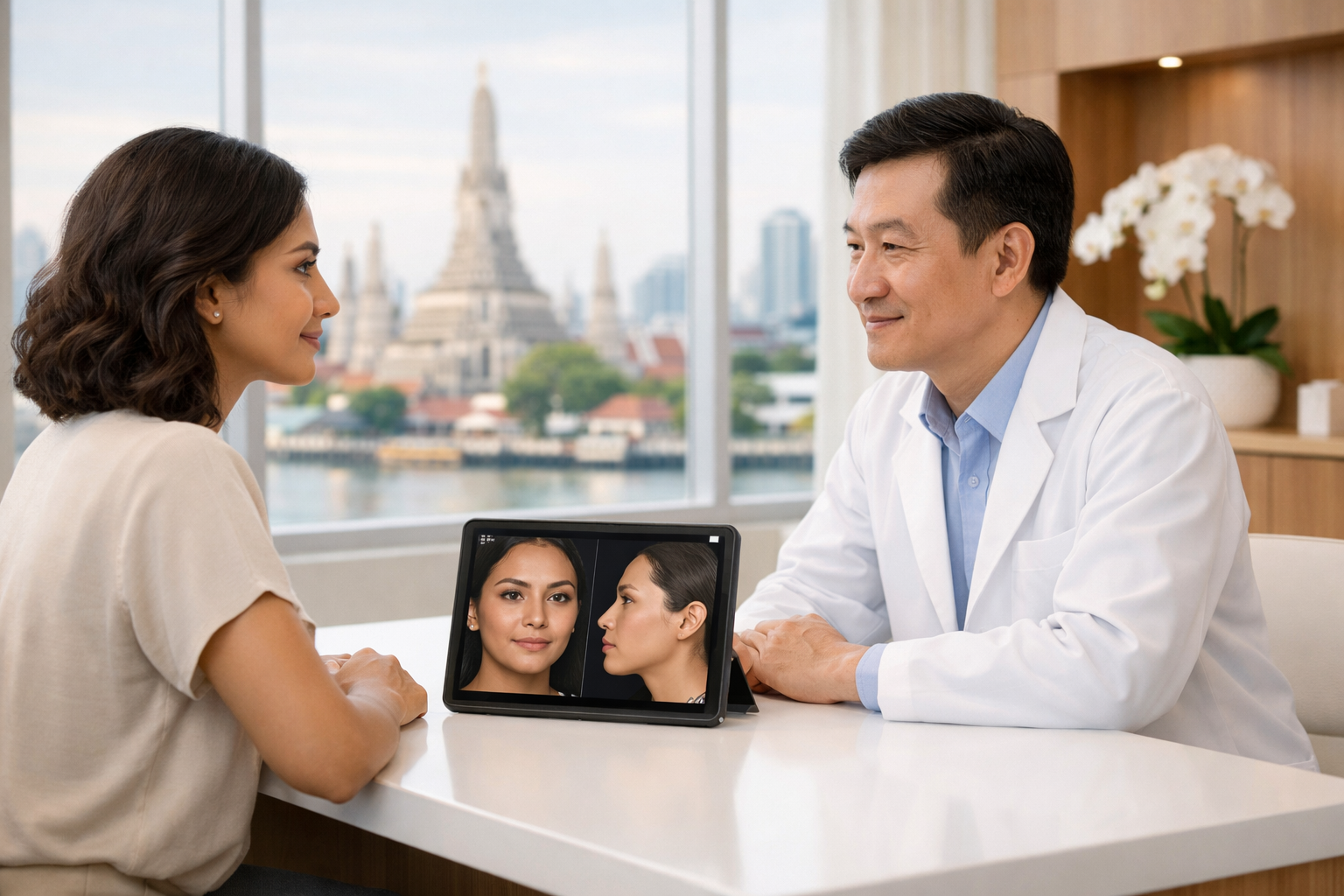
Implant volume is measured in cubic centimeters (cc), not cup sizes. A general rule: 150-200cc increases approximately one cup size, but this varies significantly based on your existing breast tissue and chest width. Thai surgeons typically use 3D imaging during consultation to simulate different sizes on your body.
Common size ranges and typical results:
- 250-300cc: Subtle enhancement, approximately 1 cup size increase
- 300-400cc: Moderate enhancement, 1-1.5 cup size increase (most common)
- 400-500cc: Significant enhancement, 1.5-2 cup size increase
- 500cc+: Maximum augmentation, suitable for patients with adequate tissue coverage
Round vs. Anatomical (Teardrop) Implants
The choice between round and anatomical implants affects both appearance and feel. Your surgeon will assess your tissue characteristics and aesthetic goals to recommend the optimal shape.
Round implants are ideal for:
- Patients with moderate existing breast tissue
- Those wanting upper pole fullness and cleavage
- Patients seeking less expensive options
- Lower risk of rotation concerns
Anatomical (teardrop) implants are ideal for:
- Patients with minimal natural breast tissue
- Those seeking the most natural slope and shape
- Reconstruction patients or significant asymmetry cases
- Patients willing to pay premium for advanced technology
Implant Placement: Subglandular vs. Submuscular
Placement affects recovery time, long-term appearance, and mammography considerations. Most Thai surgeons prefer submuscular (under the muscle) placement for the majority of patients.
Placement options explained:
- Submuscular (under muscle): Most common. Provides additional tissue coverage, more natural look in thin patients, lower capsular contracture risk. Longer recovery (2-3 weeks for muscle healing).
- Subglandular (above muscle): Suitable for patients with adequate breast tissue. Faster recovery (1-2 weeks), more implant visibility/rippling in thin patients.
- Dual-plane: Hybrid technique—upper pole under muscle, lower pole under breast tissue. Balances coverage with natural movement.
Incision Options: Where Will the Scar Be?
Your incision location determines scar visibility. Thai surgeons typically offer three approaches, with inframammary (under the breast fold) being the most common for optimal precision.
Incision locations compared:
- Inframammary (under breast fold): Most popular choice. Scar hidden in natural crease. Best surgical access and visibility. Suitable for all implant types.
- Periareolar (around nipple): Scar blends with areola border. Best for simultaneous breast lift. Slightly higher infection risk. May affect nipple sensation.
- Transaxillary (armpit): No breast scar. Requires endoscopic equipment. Limited to submuscular placement. More difficult for large implants or revisions.
Recovery Timeline: What to Expect Week by Week
Breast augmentation recovery progresses through distinct phases. Most patients can resume light activities within one week, but full recovery requires patience. Follow your surgeon's specific instructions—this timeline provides general guidance.
Days 1-3: Immediate Post-Op
You will remain in the hospital for 1-2 nights for monitoring. Expect moderate discomfort, tightness, and pressure in the chest. Pain is typically well-controlled with prescribed medications. Your chest will be wrapped in a surgical bra or bandage. Sleep elevated on your back to reduce swelling.
Day 1-3 priorities:
- Rest and stay hydrated
- Take prescribed antibiotics and pain medication
- Avoid raising arms above shoulder level
- Use ice packs (not directly on skin) for swelling
- Begin gentle walking to promote circulation
Week 1: Early Recovery
Bruising peaks around days 3-5, then begins subsiding. Swelling is significant—your breasts will appear unnaturally high and firm. This is normal and temporary. You will return for your first follow-up appointment where the surgeon checks incision healing and implant position.
Week 1 milestones:
- Return to hotel/accommodation (if traveling)
- Showering permitted (usually day 2-3)
- Continue wearing surgical bra 24/7
- Light walking encouraged
- No driving, lifting, or overhead reaching
Weeks 2-4: Settling In
Bruising fades significantly. Implants begin "dropping and fluffing"—settling into their final position as tissues stretch and accommodate the new volume. This process continues for months. Most patients feel comfortable enough to explore Thailand lightly, though strenuous activities remain restricted.
Weeks 2-4 guidelines:
- Return to desk work (if remote) or light activities
- Continue wearing supportive bra
- Gentle arm exercises as approved by surgeon
- Swimming and submersion still prohibited
- Sleeping on side may be permitted (surgeon-dependent)
Months 2-3: Final Results Emerge
Swelling resolves substantially. Implants settle into final position. Scars begin fading from red/pink to lighter tones. Sensation gradually returns to nipples and breast skin. Most patients can resume all normal activities including exercise, though high-impact sports may require longer.
Months 6-12: Fully Healed
Final results are visible—breasts feel natural, move naturally, and scars have faded significantly. Many patients report that implants feel like part of their body by this point. Annual check-ups with your surgeon (or local physician) monitor implant integrity.
Safety Standards and Choosing Your Surgeon
Patient safety should be your primary concern when selecting a surgeon and facility for breast augmentation. Thailand's reputation for medical tourism is built on JCI-accredited hospitals that meet international standards for surgical safety, infection control, and emergency preparedness.
Verify before booking:
- Hospital accreditation: Confirm JCI accreditation status on the official JCI website
- Surgeon credentials: Board certification in plastic surgery, membership in ISAPS or similar
- Before/after portfolio: Review extensive photos of similar body types
- Complication protocols: Understand revision policies and emergency procedures
- Implant warranties: Verify manufacturer warranties are valid in your home country
Travel Planning for Breast Augmentation Patients
Planning your medical trip requires balancing recovery needs with travel logistics. Most breast augmentation patients stay in Thailand for 7-10 days post-surgery before flying home.
Recommended travel timeline:
- Day -2 to Day 0: Arrive in Thailand, pre-op consultation and testing
- Day 1: Surgery day, overnight hospital stay
- Day 2-7: Recovery in hotel near hospital, follow-up appointments
- Day 7-10: Final check-up, clearance to fly home
- Home recovery: Continue follow-up via telemedicine with Thai surgeon
Flight Considerations: Wait at least 7 days before flying. Book aisle seats for easier bathroom access. Wear your surgical bra during the flight. Stay hydrated and walk the cabin every hour to prevent blood clots. Carry your discharge summary and implant identification card.
Frequently Asked Questions
How long do breast implants last?
Modern breast implants are not lifetime devices, but many last 15-20 years or longer without issues. The FDA recommends periodic monitoring (MRI or ultrasound) starting 5-6 years after surgery, then every 2-3 years. Revision surgery may be needed for rupture, capsular contracture, or aesthetic concerns—not because implants "expire."
Will I lose nipple sensation?
Temporary changes in nipple sensation are common (affecting 10-15% of patients), usually resolving within 3-6 months. Permanent sensation loss is rare (less than 5%) and more likely with periareolar incisions or very large implants. Most patients report normal or enhanced sensitivity after healing.
Can I breastfeed after augmentation?
Most women can breastfeed after breast augmentation, especially with submuscular placement and inframammary incisions that avoid breast tissue. However, some women experience reduced milk supply. If future breastfeeding is important to you, discuss this with your surgeon—certain techniques preserve more milk-producing tissue.
What is capsular contracture?
Capsular contracture occurs when scar tissue tightens around the implant, potentially causing hardness, distortion, or discomfort. Modern surgical techniques (submuscular placement, antibiotic irrigation, minimal handling) have reduced rates to approximately 5-10%. Thai surgeons use proven preventative protocols.
Is it safe to get breast implants in Thailand?
Yes—when you choose JCI-accredited hospitals and board-certified surgeons. Thailand's top facilities meet the same safety standards as US hospitals. The key is thorough research: verify credentials, review portfolios, and ensure the hospital has proper emergency protocols. Avoid unlicensed clinics or prices that seem too good to be true.
Ready to Start Your Journey?
Breast augmentation in Thailand offers exceptional value when performed at accredited facilities by experienced surgeons. The combination of advanced surgical techniques, premium implant options, and comprehensive post-operative care makes Thailand a leading destination for this transformative procedure.
Take the first step toward your aesthetic goals. Submit a free consultation request and our team will connect you with board-certified Thai plastic surgeons specializing in breast augmentation. We'll provide personalized cost estimates, answer your questions, and help you plan every aspect of your medical journey to Thailand.