First Plastic Surgery Consultation Thailand | Guide
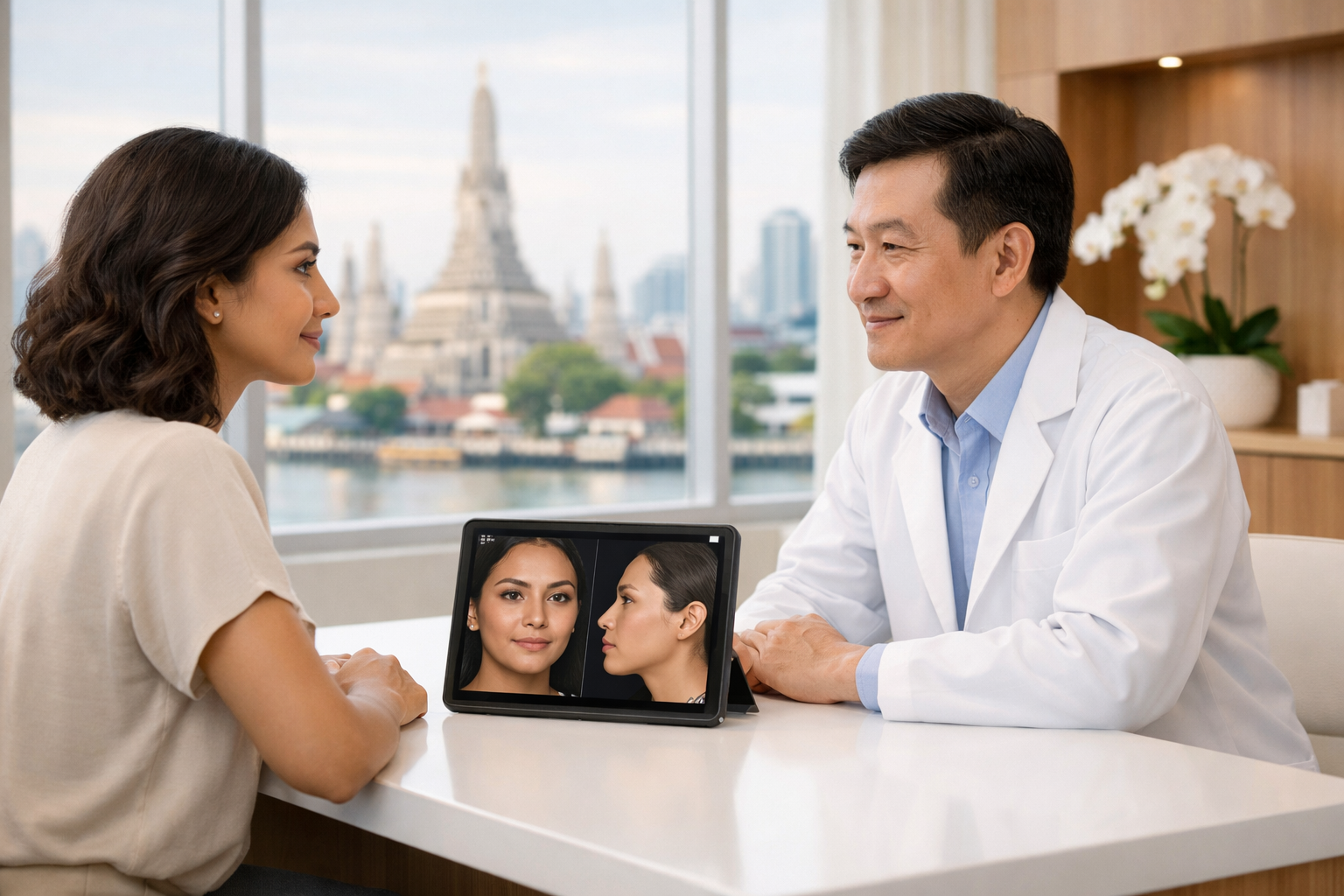
Your first plastic surgery consultation is the foundation of your entire surgical journey. Whether you are considering rhinoplasty, breast augmentation, a tummy tuck, or any other procedure, this initial meeting-virtual or in-person-determines whether Thailand is the right choice for your goals. For over 20 years, Thailand has built its reputation as a premier destination for cosmetic surgery, with more than 60 JCI-accredited hospitals and board-certified surgeons who have collectively treated over 26,000 international patients. Understanding what happens during this consultation helps you make an informed decision and ensures you select a qualified surgeon at a facility that meets international safety standards.
Virtual vs. In-Person Consultations: The Two-Step Process
For international patients, the consultation process in Thailand follows a two-step approach designed to minimize travel while maximizing preparation.
Step 1: The Virtual Consultation
Most patients begin with a virtual consultation conducted via secure video call or through a detailed medical questionnaire with photo submission. During this phase, you will submit clear photographs of the area you wish to treat (taken from specific angles as instructed), a complete medical history including previous surgeries and current medications, and a description of your aesthetic goals. The surgeon reviews these materials and provides preliminary feedback on whether you are a suitable candidate, which specific techniques may be appropriate, estimated costs, and recommended recovery timelines in Thailand. This initial assessment is typically free of charge at reputable hospitals such as Yanhee International Hospital, Bangpakok 9 International Hospital, or Bangkok Hospital Pattaya.
Step 2: The In-Person Consultation
Once you arrive in Thailand-typically 1-2 days before your scheduled surgery-you will have a comprehensive in-person consultation. This face-to-face meeting is mandatory before any procedure can proceed. The surgeon performs a physical examination, takes precise measurements, assesses skin quality and tissue characteristics, and discusses your goals in detail. This is when the final surgical plan is confirmed, informed consent documents are reviewed, and pre-operative photographs are taken for your medical record. The in-person consultation ensures the surgical plan is tailored to your unique anatomy and that you have realistic expectations about the outcome.
What Happens During the In-Person Consultation
A thorough consultation at a JCI-accredited hospital in Thailand typically follows this structure:
Key elements of the consultation:
- Medical History Review: The surgeon and anesthesiologist review your complete health profile, including allergies, medications, previous surgeries, and any conditions that could affect anesthesia or healing.
- Physical Examination: Detailed assessment of the treatment area including skin elasticity, tissue volume, bone structure, and any asymmetries that need to be addressed.
- 3D Imaging and Simulation: Many top hospitals now use 3D imaging technology to show potential outcomes, particularly for facial procedures like rhinoplasty.
- Procedure Explanation: The surgeon explains the specific surgical technique, anesthesia type (general vs. local with sedation), incision placement, and expected scarring.
- Before and After Portfolio: Reviewing the surgeon's documented results on patients with similar anatomy to yours.
- Risk Disclosure: A detailed discussion of potential complications, how they are managed, and the hospital's safety protocols.
Essential Questions to Ask Your Surgeon
Come prepared with written questions. The consultation is your opportunity to evaluate the surgeon's expertise and communication style. Consider asking:
Critical questions for your consultation:
- Are you board-certified by the Society of Plastic and Reconstructive Surgeons of Thailand (ThPRS)?
- How many times have you performed this specific procedure in the past 12 months?
- Do you hold membership in ISAPS (International Society of Aesthetic Plastic Surgery)?
- What is your complication rate for this procedure, and how are complications handled?
- What type of anesthesia will be used, and who administers it?
- What is the realistic recovery timeline, and when can I safely fly home?
- What happens if I am not satisfied with the results or require a revision?
- Can I speak with a previous patient who had this procedure?
Pro Tip: Take notes during the consultation or ask to record the conversation (with permission). Many patients feel overwhelmed by information, and having a record helps you review the details later. Don't hesitate to ask for clarification-ethical surgeons welcome informed patients.
Understanding the Quote and What It Includes
After the consultation, you will receive a detailed written quote. In Thailand's leading hospitals, transparent pricing is standard. The quote should clearly itemize: surgeon's professional fee, anesthesiologist fee, operating room and facility charges, all medical supplies and implants, standard pre-operative tests (blood work, ECG, chest X-ray), hospital accommodation for the recommended stay, post-operative medications and dressings, and follow-up appointments before departure. Be cautious of quotes that seem significantly lower than others or lack detailed breakdowns. Quality care at JCI-accredited facilities follows standardized pricing structures.
Red Flags: When to Seek a Second Opinion
While Thailand offers exceptional medical care, not all providers meet the same standards. Watch for these warning signs during your consultation:
Warning signs to watch for:
- The surgeon guarantees "perfect" results or promises outcomes that seem unrealistic.
- You feel pressured to book immediately or offered "today only" discounts.
- The facility cannot provide clear documentation of JCI accreditation.
- The surgeon dismisses your questions about risks or seems irritated by detailed inquiries.
- You are not given adequate time to review informed consent documents.
- The quote lacks itemization or seems suspiciously low compared to other hospitals.
Trust your instincts. If something feels wrong, consult another surgeon. Reputable hospitals in Thailand encourage second opinions and will provide your medical records for this purpose.
How Plastic Surgery Thailand Supports Your Consultation
Navigating consultations in a foreign country can be complex. Plastic Surgery Thailand acts as your independent advocate throughout this process. We help you prepare your medical information and photos for the initial virtual consultation, coordinate appointments with board-certified surgeons at vetted JCI-accredited hospitals, ensure you receive transparent, comparable quotes from multiple providers if desired, review the proposed surgical plans with you to ensure your questions are addressed, and provide ongoing support throughout your stay in Thailand. Our service is free to patients; we are compensated by the hospitals in our network, which allows us to remain objective and focused entirely on your best interests.
Frequently Asked Questions
How long should I plan to stay in Thailand for the consultation?
Schedule your arrival at least 48 hours before your planned surgery date. This allows time for your in-person consultation, pre-operative tests, and a recovery day before the procedure. For complex surgeries like multiple procedures or gender affirmation surgery, a longer stay may be recommended.
Can I have consultations at multiple hospitals?
Yes, and this is often advisable. Many patients consult with surgeons at two different hospitals to compare approaches and feel confident in their choice. Plastic Surgery Thailand can coordinate multiple consultations during the same trip.
What if I need to reschedule after the consultation?
Life happens. If you decide not to proceed or need to reschedule, you should not face penalties at reputable hospitals. Any deposits for surgery should be clearly refundable according to the hospital's stated cancellation policy.
Do I need to bring medical records to Thailand?
Bring copies of any relevant medical records, especially if you have had previous surgeries in the same area, have chronic conditions, or take regular medications. While virtual consultations allow pre-review, having physical copies ensures nothing is missed.
Ready to start your consultation process? Submit a free assessment to receive personalized recommendations from board-certified surgeons at Thailand's leading JCI-accredited hospitals. No obligation, no fees-just expert guidance for your journey.