Tummy Tuck Thailand 2026: Costs, Recovery Timeline & Safety
A tummy tuck (abdominoplasty) can be a life-changing procedure for patients dealing with loose skin, stretched abdominal muscles, and stubborn lower-belly fullness-often after pregnancy or major weight loss. Thailand is a popular destination for abdominoplasty because patients can access modern hospital care, experienced surgeons, and clear treatment plans at significantly lower prices than many Western countries. Learn more about tummy tuck in Thailand and request a free consultation anytime.
Tummy Tuck Cost in Thailand (Verified Partner Hospital Pricing)
Below are the verified starting prices at our partner hospitals (USD). Exact quotes depend on your anatomy, whether muscle repair is required, and whether additional contouring (such as liposuction) is included. These figures are taken from the current pricing displayed on our tummy tuck procedure page.
Starting prices (USD):
- Yanhee International Hospital: $3,989
- Bangpakok 9 International Hospital: $4,300 - $8,200
- Phuket International Hospital: $4,589 - $7,171
- Apex Medical Center (clinic): $8,139 - $10,712
What’s typically included at partner hospitals: surgeon and anaesthesiologist fees, operating theatre and equipment, hospital stay (commonly 2-4 nights), post-operative medications and compression garment, and follow-up consultations. If you’d like a precise quote and a recommended hospital option (Bangkok vs Phuket), submit your photos for review here: free consultation.
International comparison (typical ranges)
For planning purposes, our site currently displays the following comparison ranges: Thailand $3,568-$6,163; Australia $12,000-$20,000; United States $8,000-$15,000; United Kingdom £6,000-£10,000. These are general benchmarks and not a substitute for a personalized quote.
What a Tummy Tuck Does (and Doesn’t Do)
A tummy tuck can help with:
- Removing excess lower-abdominal skin
- Tightening separated abdominal muscles (diastasis recti) when indicated
- Improving waist and lower-belly contour
- Helping clothes fit better and improving body confidence
A tummy tuck is not primarily for:
- Weight loss
- Treating visceral (deep internal) fat
- Cellulite treatment
Tummy Tuck vs Liposuction (When You May Need Both)
Liposuction removes fat, but it does not reliably remove significant loose skin or tighten abdominal muscles. A tummy tuck removes loose skin and can tighten the abdominal wall; in selected cases, your surgeon may recommend combining abdominoplasty with targeted liposuction for better contour. If you’re comparing options, see our full guide: Liposuction Thailand 2026.
Types of Tummy Tuck (Mini, Full, Extended)
Your surgeon will recommend the right approach based on skin laxity and muscle separation:
- Mini tummy tuck: best for mild skin laxity below the navel; smaller scar; limited muscle repair.
- Full tummy tuck: addresses more significant loose skin; often includes muscle repair and belly button repositioning.
- Extended tummy tuck: treats skin laxity extending into the flanks/hips (common after major weight loss).
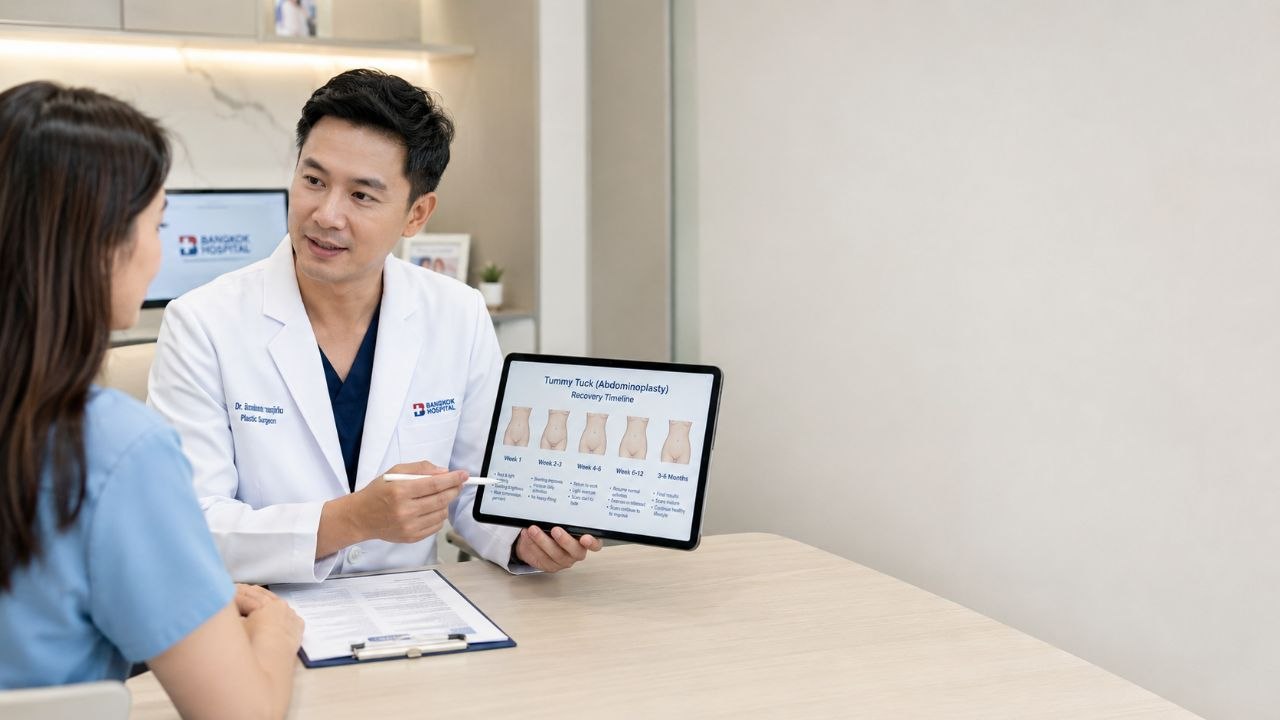
Recovery Timeline (Typical Milestones)
Many patients experience the following timeline:
- Week 1: soreness/tightness, swelling, short frequent walks; careful monitoring; you may walk slightly bent at first.
- Weeks 2-3: improving mobility; swelling continues; follow-up appointments; compression garment as instructed.
- Weeks 4-6: gradual return to routine; avoid heavy lifting and intense core work unless cleared.
- 3-6 months: swelling continues to settle; scar maturation begins; contour refines.
- 6-12 months: scars fade and soften; final result becomes more stable.
How Long Should You Stay in Thailand?
Many international patients plan a 9-14 day stay depending on procedure complexity and follow-up schedule. Your surgeon will advise the safest timing for travel, activity, and return to work. If Phuket is a better fit for your recovery logistics, we can coordinate evaluation and scheduling with Phuket International Hospital.
Safety: How to Choose the Right Hospital
For abdominoplasty, prioritize hospital-grade safety: proper anaesthesia care, monitored recovery, and clear complication protocols. Thailand has JCI-accredited hospitals; our guidance on choosing a facility is here: How to Choose a Hospital for Plastic Surgery in Thailand.
Questions to ask during consultation:
- Will you repair diastasis recti (muscle separation) in my case?
- Where will my scar sit and how long will it be?
- Do you recommend drains or a drainless technique for my anatomy?
- What is the aftercare plan, and what follow-ups are included?
- What is the plan if a complication occurs while I’m in Thailand?
FAQ
Is a tummy tuck painful?
Most patients describe tightness and soreness in the first week, improving gradually. Your hospital team will provide a pain-control plan.
Will I need drains?
Some surgeons use drains; others prefer drainless techniques in selected cases. Your surgeon will advise what’s appropriate for your plan.
When can I fly home?
This depends on healing and follow-up schedule. Your surgeon will clear you for travel based on your recovery.
Next Step: Get a Personalized Plan
If you’re considering a tummy tuck in Thailand, the safest next step is a surgeon-led plan at a proper hospital facility. Submit your photos and goals to receive a recommended approach and confirmed quote: request a free consultation.