Plastic Surgery: Thailand vs Korea vs Turkey | 2026
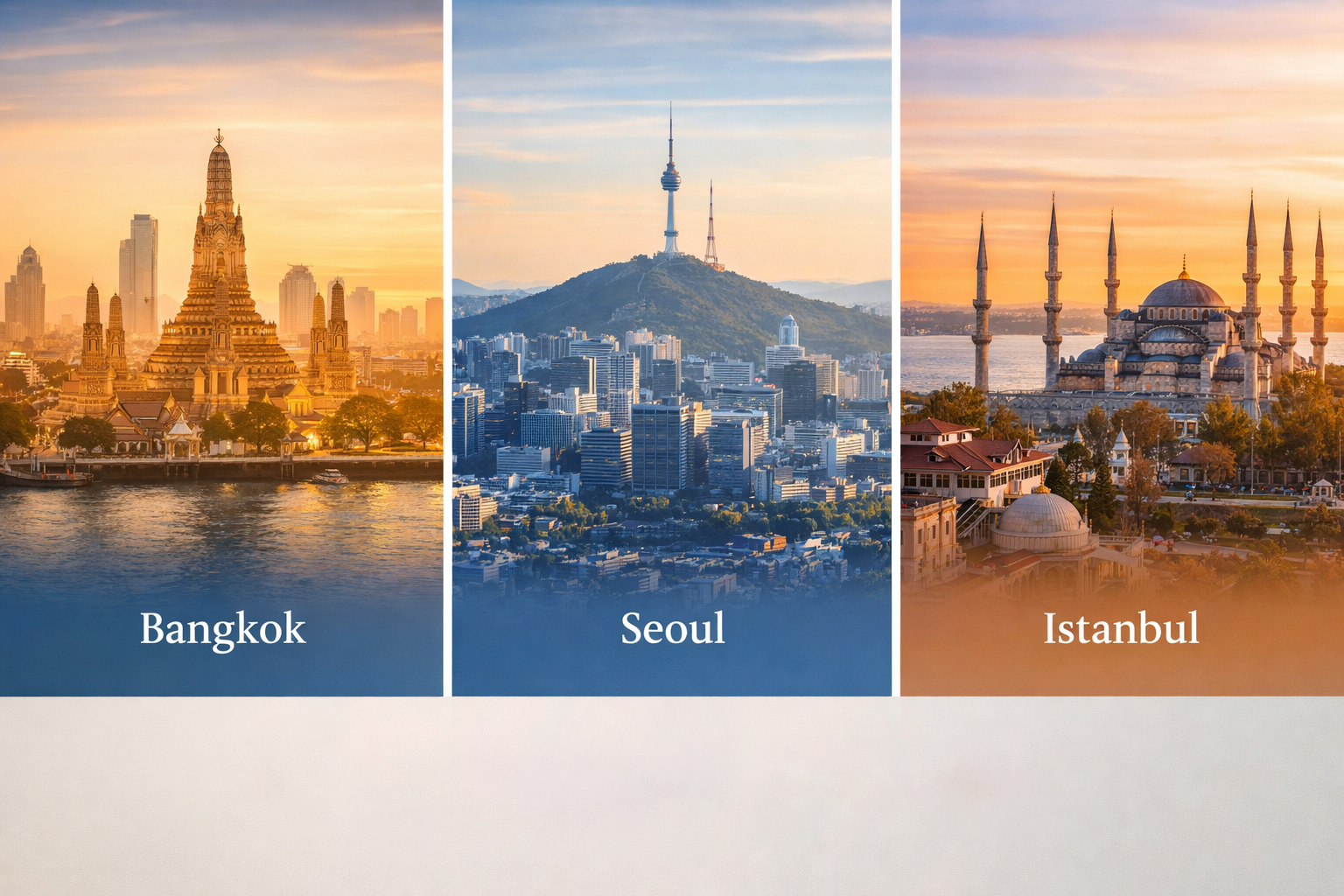
When considering cosmetic surgery abroad, three destinations consistently dominate the conversation: Thailand, South Korea, and Turkey. Each has carved out a distinct position in the global medical tourism market, attracting hundreds of thousands of international patients annually. But the "best" destination depends entirely on your priorities-whether that is cost savings, specific surgical expertise, safety standards, or the overall experience. This comprehensive comparison examines how these three medical tourism powerhouses stack up in 2026, covering pricing, accreditation, specialties, and practical considerations to help you make an informed decision.
At a Glance: The Three Destinations
Before diving into specifics, here is how each country positions itself in the medical tourism landscape:
Destination strengths:
- Thailand: The established pioneer. Over 20 years of medical tourism infrastructure, more than 60 JCI-accredited hospitals, and a reputation for body contouring and gender affirmation surgery. Hospitals operate like luxury hotels with comprehensive international patient services.
- South Korea: The facial aesthetics capital. Home to advanced techniques in rhinoplasty, double eyelid surgery, and facial contouring. The K-beauty aesthetic drives innovation, though at a premium price point compared to other Asian destinations.
- Turkey: The value destination. Aggressive pricing and all-inclusive packages have made it popular for hair transplants and dental work. However, rapid industry expansion means quality varies significantly between providers.
Cost Comparison: What You Actually Pay
Cost remains the primary driver for medical tourism, but the cheapest option is not always the best value. Here is how pricing compares in 2026:
Thailand: Transparent Premium Value
Thailand offers significant savings compared to Western markets-typically 50-70% less than US or UK prices for equivalent procedures. The key differentiator is transparency: reputable hospitals provide itemized quotes that include surgeon fees, anesthesia, facility costs, implants, and standard post-operative care. Unlike some destinations, Thai hospitals rarely advertise "too good to be true" prices that later balloon with hidden fees. The cost often includes premium hospital accommodation, English-speaking coordinators, and comprehensive aftercare protocols.
South Korea: Premium Pricing for Premium Results
South Korea sits at the highest price point of the three destinations, though still generally 30-50% below US costs for many procedures. The premium reflects the country's focus on facial aesthetics and the concentration of top-tier clinics in Gangnam, Seoul's medical district. However, this pricing does not always include the same level of hospital facilities as Thailand-many Korean plastic surgery clinics are standalone operations rather than full-service hospitals, which matters if complications arise.
Turkey: Low Base Prices, Variable Value
Turkey consistently advertises the lowest headline prices, driven by government subsidies for medical tourism and favorable exchange rates. Hair transplant packages starting at €1,500 and all-inclusive deals are common. However, the "all-inclusive" model can obscure what is actually covered, and the aggressive pricing has led to concerns about high patient volumes compromising care quality. The low cost is genuine-but requires diligent vetting of providers.
Reality Check: When comparing quotes, ensure you are evaluating equivalent inclusions. A higher upfront price that covers accommodation, transfers, medications, and follow-up care may represent better value than a lower base price with numerous add-ons.
Surgical Specialties: Where Each Country Excels
Each destination has developed expertise aligned with local demand and historical focus. Matching your procedure to the right country improves outcomes:
Procedure recommendations by destination:
- Thailand leads in: Body contouring (tummy tucks, liposuction, mommy makeovers), breast surgeries (augmentation, reduction, reconstruction), gender affirmation surgery (facial feminization, breast augmentation for MTF, phalloplasty/metoidioplasty), and revision surgeries on diverse body types.
- South Korea dominates: Facial aesthetics including rhinoplasty (especially Asian nose types), double eyelid surgery/blepharoplasty, jaw/chin contouring (V-line surgery), and facial fat grafting. The K-beauty influence drives techniques focused on refined, youthful appearances.
- Turkey specializes in: Hair transplantation (FUE, DHI techniques), dental veneers and cosmetic dentistry, and increasingly rhinoplasty-though often focused on Middle Eastern and European nose types.
Hospital Accreditation and Safety Standards
Safety should be the non-negotiable factor in your decision. JCI (Joint Commission International) accreditation represents the gold standard for global healthcare, with rigorous standards for patient safety, infection control, and emergency protocols.
Thailand stands out with over 60 JCI-accredited hospitals-one of the highest counts worldwide and the leader in Southeast Asia. This density of accredited facilities means patients can choose from multiple world-class hospitals in Bangkok, Phuket, Pattaya, and Chiang Mai. Major hospitals like Bumrungrad International (Asia's first JCI-accredited hospital in 2002), Bangkok Hospital, and Yanhee International maintain full-service emergency departments, intensive care units, and specialist departments that standalone clinics cannot match.
South Korea also has JCI-accredited facilities, but the landscape is more mixed. Many high-profile plastic surgery clinics in Gangnam operate as specialized centers without full hospital accreditation. While these clinics may deliver excellent cosmetic results, they typically lack the comprehensive emergency infrastructure of a full hospital-an important consideration for complex procedures or patients with underlying health conditions.
Turkey has a growing number of JCI-accredited hospitals, particularly in Istanbul and Ankara. However, the explosive growth of the medical tourism industry has outpaced regulatory oversight in some areas. The hair transplant sector, in particular, has seen issues with unlicensed operators and high-volume clinics prioritizing quantity over quality. Patients must verify accreditation independently and be wary of clinics that cannot provide current JCI documentation.
Patient Experience: Language, Logistics, and Recovery
The practical aspects of medical tourism significantly impact your experience. Consider these factors:
Experience comparison:
- Thailand: International patient services are mature and comprehensive. Major hospitals employ coordinators speaking English, Arabic, Japanese, Chinese, and other languages. Recovery can take place in resort settings (Phuket, Pattaya) or urban luxury (Bangkok). The culture of hospitality ("sanuk" and service excellence) is ingrained in medical facilities.
- South Korea: Top clinics offer excellent translation services, but English is less widely spoken outside medical centers. Seoul provides urban recovery environments with limited resort-style options. The focus is on efficient, high-volume service rather than extended stays.
- Turkey: Package deals typically include airport transfers, hotel accommodation, and translators-making logistics straightforward. However, the "package" model can feel transactional, with less personalized care. Istanbul offers cultural richness but a busier, more chaotic recovery environment.
Red Flags and Risk Factors
Each destination carries specific risks that informed patients should understand:
Destination-specific considerations:
- Thailand: The main risk is choosing a non-JCI-accredited clinic based on price alone. Stick to verified hospitals or clinics with transparent credentials.
- South Korea: Revision rates for some procedures can be higher than advertised, particularly for complex facial contouring. The pressure to achieve specific aesthetic ideals may lead to overtreatment.
- Turkey: Quality control varies dramatically. "Hair mill" clinics performing 10+ transplants daily raise concerns about technician skill and graft survival rates. Dental tourism has seen cases of unnecessary treatments being recommended.
The Verdict: Which Destination is Right for You?
There is no universal "best" destination-only the best choice for your specific situation. Use this framework:
Choose Thailand if:
Thailand is ideal for:
- You want body contouring, gender affirmation surgery, or breast procedures
- Hospital accreditation and emergency capabilities are priorities
- You prefer a resort-like recovery environment
- You value transparent pricing with no hidden costs
- You want a balance of quality and value
Choose South Korea if:
South Korea is ideal for:
- Your primary focus is facial aesthetics (nose, eyes, jaw)
- You specifically want the K-beauty aesthetic
- Budget is less of a constraint than achieving a specific look
- You are comfortable with clinic-based (vs hospital-based) care
Choose Turkey if:
Turkey is ideal for:
- You need hair transplantation (with thorough vetting of the clinic)
- You want all-inclusive packages that handle logistics
- You are seeking the lowest absolute cost for simple procedures
- You have done extensive research on your specific provider
Frequently Asked Questions
Can I combine procedures across destinations?
Generally, no. It is not advisable to have surgery in multiple countries on the same trip due to recovery requirements, continuity of care issues, and travel restrictions post-surgery. Choose one destination and give yourself adequate recovery time before flying home.
What if I need a revision? Which destination is best?
Thailand has emerged as a revision surgery hub, with surgeons experienced in correcting work from other countries. Korean clinics also handle revisions but often at premium prices. Turkey's revision infrastructure is less developed, particularly for hair transplant corrections.
How do I verify JCI accreditation?
Always check the Joint Commission International website directly rather than relying on a clinic's claim. Accreditation must be renewed every three years, so verify the current status. Ask the hospital for their JCI certificate number and cross-reference it.
Does insurance cover complications abroad?
Standard travel insurance rarely covers elective cosmetic surgery. Some medical tourism facilitators and hospitals offer complication insurance, or you can purchase specialized medical tourism insurance. Factor this cost into your budget-it is essential protection.
Still deciding? Submit a free assessment with Plastic Surgery Thailand to receive personalized recommendations based on your specific procedure, budget, and priorities. We provide objective guidance across destinations, though we specialize in Thailand's JCI-accredited hospitals.